
 By Admin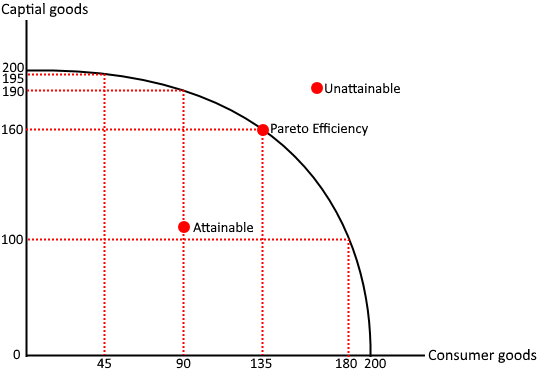
Welcome to the fascinating world of economics, where choices shape our reality and resources are limited! Have you ever wondered how societies decide what to produce when there’s only so much time, labor, and raw materials to go around? Enter the PP frontier — a powerful visual tool that illustrates the trade-offs we face in production decisions. In this blog post, we’ll demystify the PPF with engaging visuals and easy-to-understand explanations. Whether you’re an aspiring economist or simply curious about how economies operate, join us as we explore how this graphical representation can illuminate everything from everyday choices to global market strategies. Ready to dive into the realm of economic output? Let’s get started!
Introduction to the PP frontier
Imagine a scenario where resources are limited, and choices must be made. This is the essence of economics, and at its heart lies a powerful concept known as the Production Possibility Frontier (PP frontier). Picture a graph that illustrates how an economy can efficiently allocate its resources between two competing goods. Understanding this frontier provides essential insights into trade-offs, opportunity costs, and economic efficiency.
Whether you’re curious about how nations maximize output or want to grasp the fundamentals of resource allocation in everyday decisions, exploring the PP frontier will shed light on these complex dynamics. Buckle up as we embark on a visual journey through this critical economic tool!
Explanation of the Concept and Its Importance in Economics
The PP frontier is a fundamental concept in economics, illustrating the maximum potential output of two goods with given resources and technology. It showcases trade-offs inherent in production decisions.
Understanding the PP frontier helps economists visualize scarcity. Resources are limited, so producing more of one good typically means sacrificing some quantity of another. This relationship highlights opportunity costs, an essential principle for making informed choices.
Additionally, the PP frontier serves as a benchmark for efficiency. Points on the curve represent optimal production levels, while points inside indicate underutilization of resources. This visual tool guides policymakers and businesses alike in optimizing resource allocation to achieve desired economic outcomes.
In essence, grasping this concept enhances our understanding of economic dynamics and decision-making processes within various sectors.
Factors that Shift the PP frontier
The Production Possibility Frontier (PP frontier) is dynamic, shifting based on various factors. Changes in resources play a pivotal role. When an economy discovers new materials or enhances the quantity of existing ones, it can produce more goods and services.
Technological advancements are another key factor. Innovations often lead to better production methods, allowing for increased output without requiring additional resources.
Efficiency improvements also shift the PP frontier outward. When businesses optimize processes or adopt best practices, they maximize their resource use, increasing overall productivity.
These shifts illustrate how economies adapt and grow over time. Understanding these factors helps policymakers devise strategies that foster economic development and sustainability in a competitive landscape.
– Changes in Resources
Changes in resources significantly influence the position of the production possibility frontier (PP frontier). When an economy discovers new natural resources, it can produce more goods. This shift often pushes the curve outward, representing enhanced capacity.
However, depletion of existing resources has the opposite effect. A resource that becomes scarce forces a contraction of production possibilities. The economy will have to choose between prioritizing certain goods over others.
Labor is another crucial factor. An increase in skilled labor through education or training enhances output capabilities as well. Conversely, a decline due to migration or demographic shifts can limit production potential.
Resource quality also matters; better-quality inputs lead to higher efficiency and productivity levels. Each change not only reshapes economic strategies but also influences long-term growth trajectories and policy decisions vital for sustainability and development.
– Changes in Technology
Technological advancements play a crucial role in shifting the PP frontier. When new technologies emerge, they enhance production processes and efficiency.
Consider the impact of automation. Machines can produce goods at a faster rate than human labor alone. This boosts output without requiring additional resources.
Innovations in agricultural technology offer another example. Modern farming techniques increase crop yields, allowing more food to be produced with the same amount of land.
Furthermore, breakthroughs in information technology streamline communication and data management within industries. This leads to better resource allocation and decision-making.
As these technological shifts occur, economies can expand their production capabilities. The PP frontier stretches outward, representing a broader range of possible outputs for various goods and services.
Ultimately, embracing technology is vital for any economy aiming to maximize its potential on the production possibility frontier.
– Changes in Efficiency
Changes in efficiency directly impact the production possibility frontier (PP frontier). When resources are utilized more effectively, economies can produce more goods without needing additional inputs.
Improvements in workforce skills or better management practices often lead to enhanced efficiency. For example, a factory adopting lean manufacturing techniques reduces waste and increases output. This advances the PP frontier outward, showing potential for greater economic productivity.
Additionally, investments in training programs boost employee capabilities. As workers become more skilled, their ability to contribute positively influences overall production levels.
Efficiency gains also arise from better resource allocation. When resources flow smoothly among sectors—like labor moving from declining industries to growing ones—the economy operates closer to its maximum potential.
These shifts highlight how critical it is for policymakers and businesses alike to focus on enhancing operational efficiencies within their frameworks.
Understanding the Trade-off between Two Goods on the PP frontier
When exploring the production possibilities frontier, understanding trade-offs is vital. Here, we see how producing one good affects the output of another.
Opportunity cost plays a key role in this scenario. It represents what you give up when shifting resources from one product to another. For instance, if a country decides to produce more cars instead of computers, the opportunity cost is the number of computers sacrificed for those extra cars.
The marginal rate of transformation (MRT) further clarifies these decisions. MRT indicates how many units of one good must be reduced to increase the production of another by one unit. This ratio provides insight into efficiency and resource allocation.
As societies make choices based on limited resources, these concepts guide them through potential outcomes and significantly impact economic strategies. Understanding these trade-offs allows for informed decision-making within an economy’s constraints.
– Opportunity Cost
Opportunity cost is a vital concept in the context of the PP frontier. It refers to what you forgo when choosing one option over another. Every choice comes with trade-offs, especially in economics.
Imagine allocating resources between two goods, like bread and butter. If you decide to produce more bread, the opportunity cost is the amount of butter you give up. This decision-making process shapes economic behaviors and strategies.
Understanding opportunity cost helps individuals and businesses evaluate their choices more effectively. By recognizing what’s sacrificed, they can make informed decisions that align with their goals or needs.
This concept extends beyond mere numbers; it reflects real-life implications on resource allocation, whether personal finance or large-scale production decisions. Grasping opportunity costs fosters better planning and prioritization in an ever-changing economy.
– Marginal Rate of Transformation (MRT)
The Marginal Rate of Transformation (MRT) provides insight into the trade-offs between two goods on the Production Possibility Frontier. It measures how much of one good must be sacrificed to produce an additional unit of another good.
Imagine you’re producing cars and bicycles. If you want to create more cars, MRT shows how many bicycles you need to give up in return. This rate isn’t constant; it typically changes as production shifts along the frontier.
As resources are reallocated, producers face increasing opportunity costs. Initially, they might sacrifice very few bicycles for each additional car produced. However, as they continue reallocating resources, the price rises sharply.
Understanding MRT helps businesses and policymakers make informed decisions about resource allocation. By grasping this concept, stakeholders can better navigate economic landscapes while optimizing output.
Visual Representation of a PP frontier through Graphs and Examples
Visualizing the Production Possibility Frontier (PP frontier) enhances our understanding of economic choices. Graphs often depict two goods, with one axis representing each item’s quantity.
A simple curve illustrates maximum production efficiency. Points along this curve signify optimal resource allocation. Any point inside suggests underutilization, while points outside the curve are unattainable given current resources.
Consider a country producing cars and computers. The PP frontier shows trade-offs between these two goods. If more resources shift to car manufacturing, computer output decreases—demonstrating opportunity cost clearly.
Different shapes of the frontier also indicate varying efficiencies in resource use. A straight line represents constant opportunity costs, whereas a bowed-out curve reflects increasing costs as more of one good is produced at the expense of another. Such visual representations simplify complex economic concepts into digestible insights for better decision-making.
Real-world Applications and Limitations of the PP frontier
The production possibility frontier (PP frontier) offers valuable insights into real-world scenarios. Economists use it to illustrate resource allocation and efficiency. Policymakers can assess trade-offs between different sectors, guiding decisions that affect economic growth.
Businesses benefit too. By analyzing their PP frontier, companies identify optimal production levels—balancing costs and maximizing output. This helps them allocate resources effectively.
However, the model has its limitations. It assumes a simplified economy with only two goods, which rarely reflects reality’s complexity. Factors like market fluctuations or external shocks aren’t accounted for in this static framework.
Moreover, the PP frontier doesn’t address income distribution disparities within an economy. Just because resources are utilized efficiently doesn’t mean they’re equitably shared among all individuals or groups.
Despite these challenges, understanding the PP frontier remains crucial for anyone involved in economics or business strategy. Its principles lay the groundwork for deeper analysis and informed decision-making.
You May Also Like: WACC Formula
Criticisms and Alternative Models
The production possibility frontier (PP frontier) isn’t without its critics. One major criticism is its simplification of real-world complexities. Economies are dynamic and often influenced by unpredictable variables that the PP model can’t capture effectively.
Alternative models, such as the circular flow diagram, emphasize relationships between different sectors of the economy. This approach illustrates how goods and services circulate in a more interconnected manner than the rigid boundaries set by a PP frontier.
Another alternative is game theory, which examines strategic interactions among rational decision-makers. It allows for a multifaceted view of economic choices that can lead to outcomes not predicted by traditional models.
Moreover, some economists argue for incorporating externalities into these frameworks. They believe that considering social costs or benefits provides a clearer picture of efficiency and trade-offs beyond mere output possibilities depicted on a PP graph.
Conclusion
The PP frontier is more than just a theoretical concept; it serves as a crucial tool in decision-making and shaping economic policies. By illustrating the trade-offs between various goods, this model helps policymakers understand the implications of resource allocation.
When governments or businesses consider their options, the insights gained from analyzing the PP frontier can guide them toward efficient outcomes. It highlights opportunity costs associated with production choices, fostering informed decisions that maximize resources. Additionally, shifts in technology or efficiency directly impact potential output levels along the frontier.
Understanding these dynamics enables better strategic planning for sustainable growth and development. The PP frontier not only aids economists but also empowers individuals to comprehend broader economic principles affecting daily life. Its relevance extends beyond academic theory into practical applications that influence how we produce, consume, and allocate resources within society.
As economies continue to evolve amid technological advancements and changing global landscapes, revisiting the principles of the PP frontier will remain essential for crafting effective economic strategies moving forward.